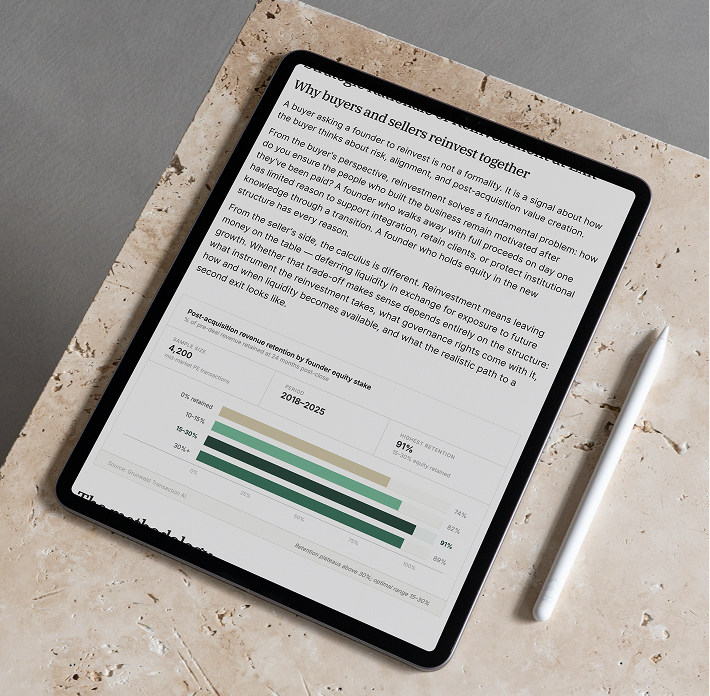
 Chapter 1
Fundamentals & structures
Why buyers ask for rollover equity — and how rollover, sweet equity and co-investment change your stake, your upside and your control after the sale.
When part of the purchase price is not paid in cash but stays invested in the company: this guide explains how rollover equity works, where value is created — and where the traps are.
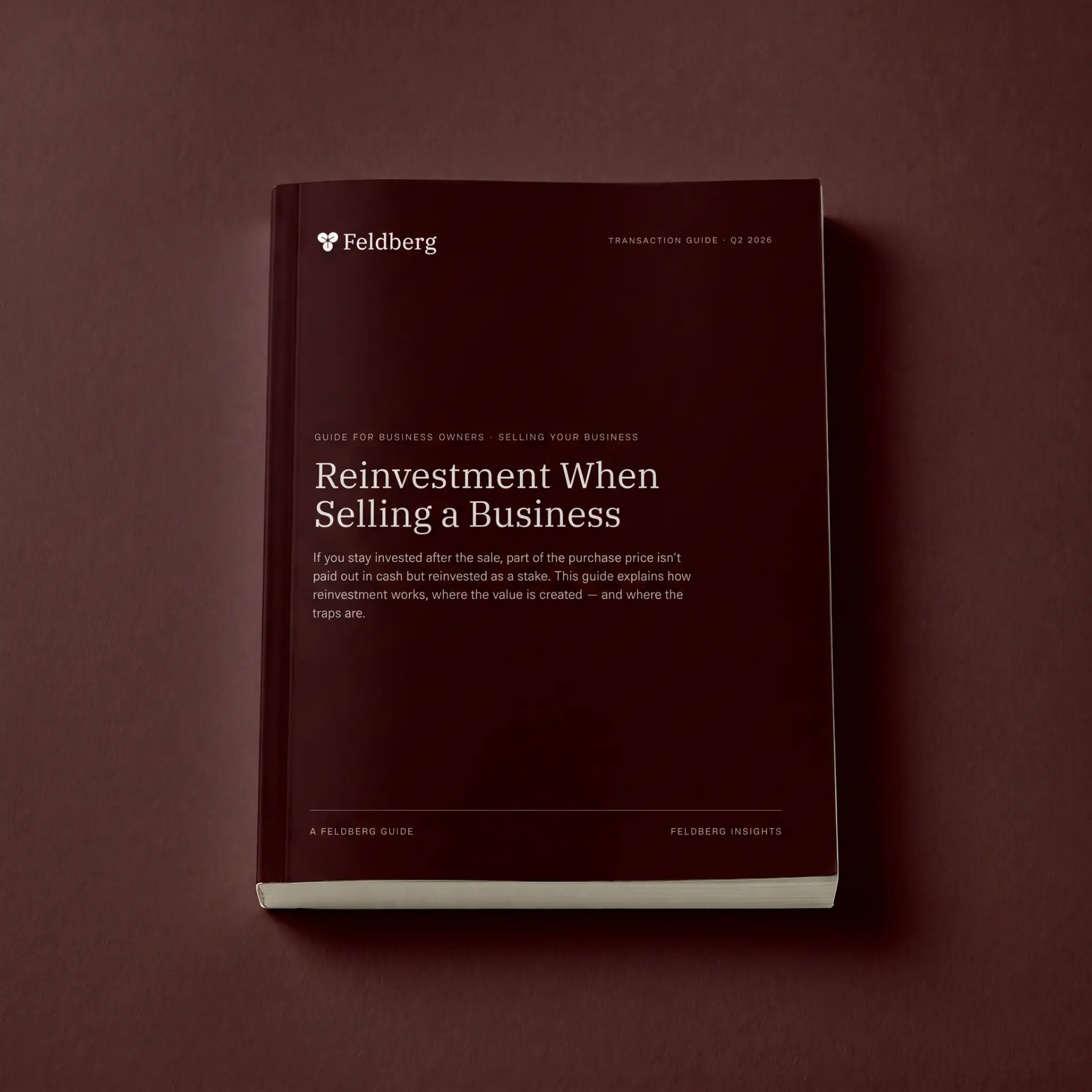 PDF · 14 pagesChapter 1
Why buyers ask for rollover equity — and how rollover, sweet equity and co-investment change your stake, your upside and your control after the sale.
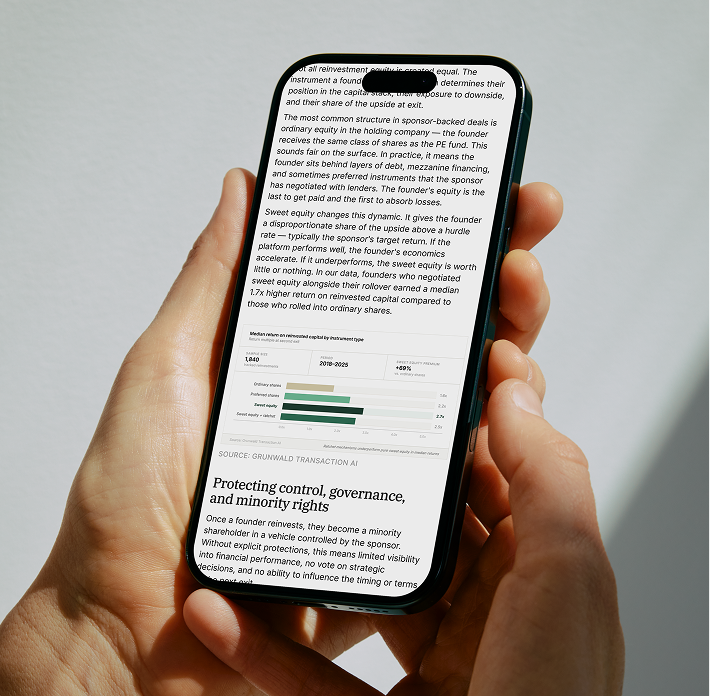 Chapter 2
How entry valuation, liquidation preference and dilution determine what your rolled-over stake is really worth — including a full waterfall.
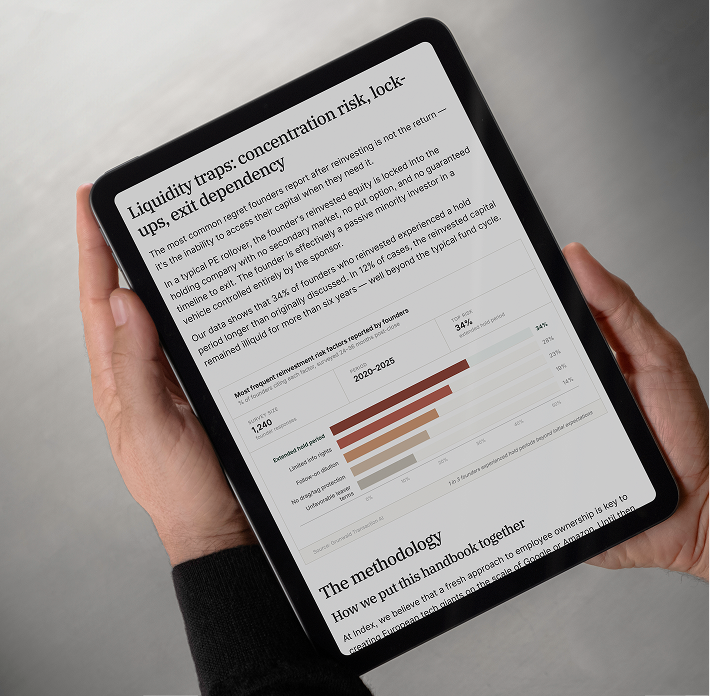 Chapter 3
The six risks that erode rollover equity, the tax levers for your net return and seven points that secure your position.
“I read this before my first adviser meeting — it completely changed how we negotiated the structure.”
 Felix BuschkotteAdvisor @ Feldberg
IT entrepreneur with more than seven years of experience and a successful exit. He supported the sale of his own family business and advised on numerous private equity acquisitions.
14 pages, built for owners, founders and their advisers. No sharing, no spam.