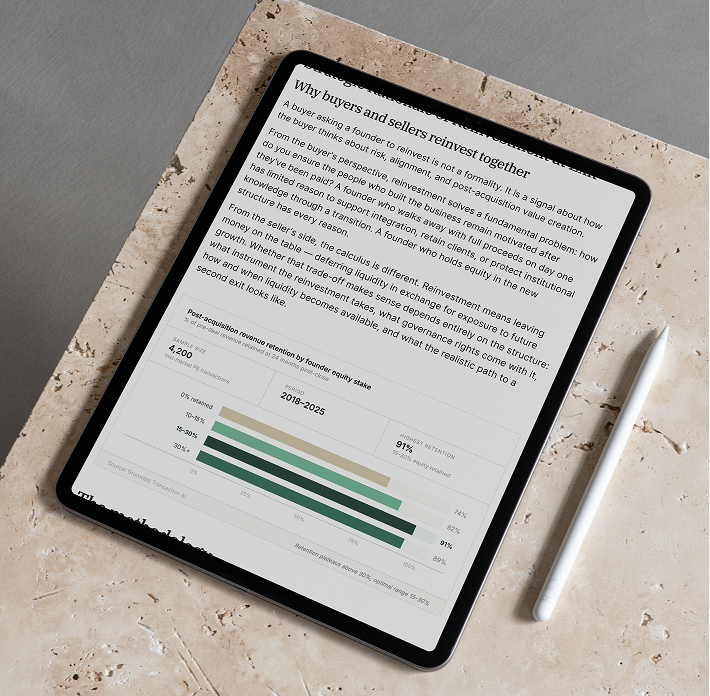
 Chapter 1
Fundamentals & structures
Why buyers ask for rollover equity — and how rollover, sweet equity and co-investment change your stake, your upside and your control after the sale.
When part of the purchase price is not paid in cash but stays invested in the company: this guide explains how rollover equity works, where value is created — and where the traps are.
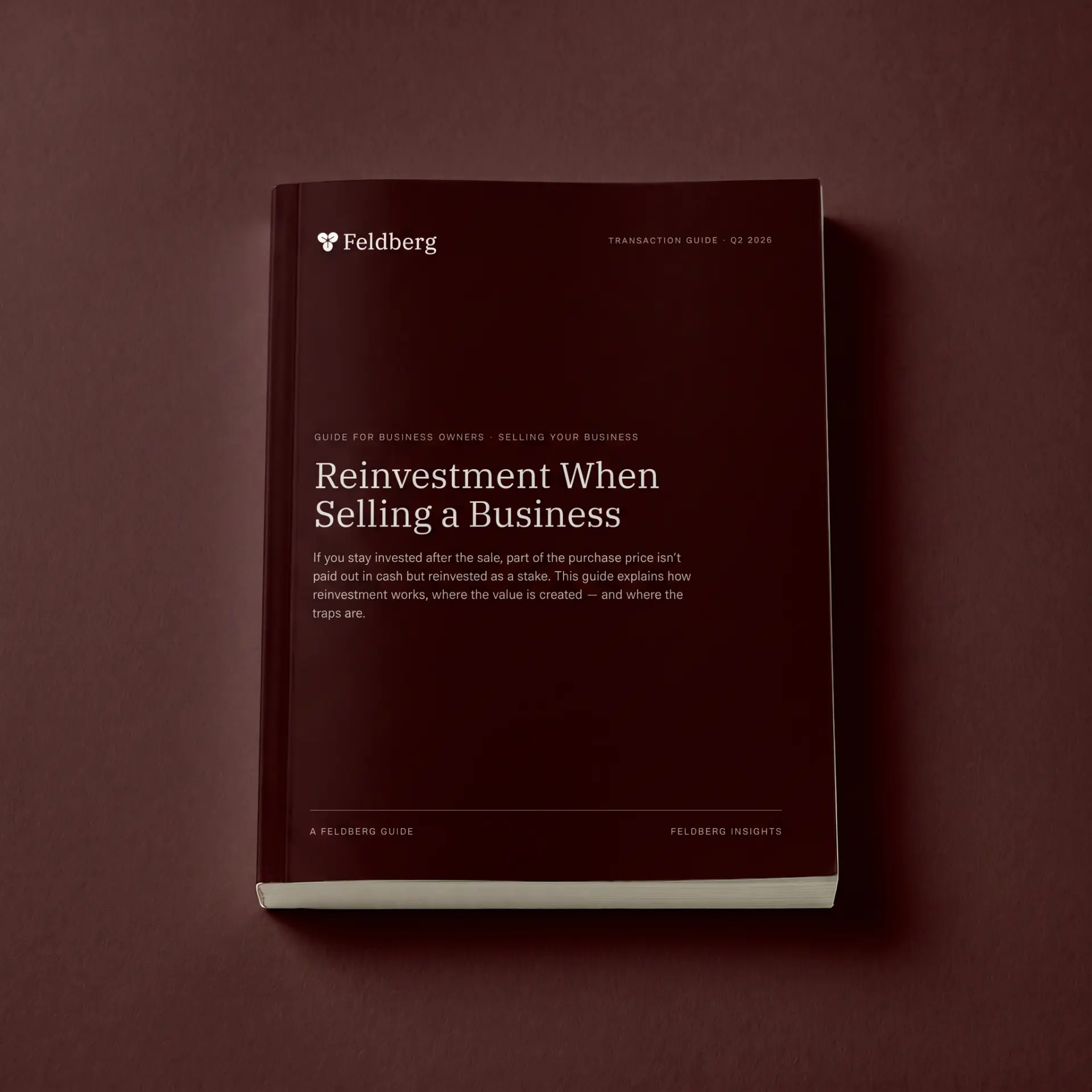 PDFChapter 1
Why buyers ask for rollover equity — and how rollover, sweet equity and co-investment change your stake, your upside and your control after the sale.
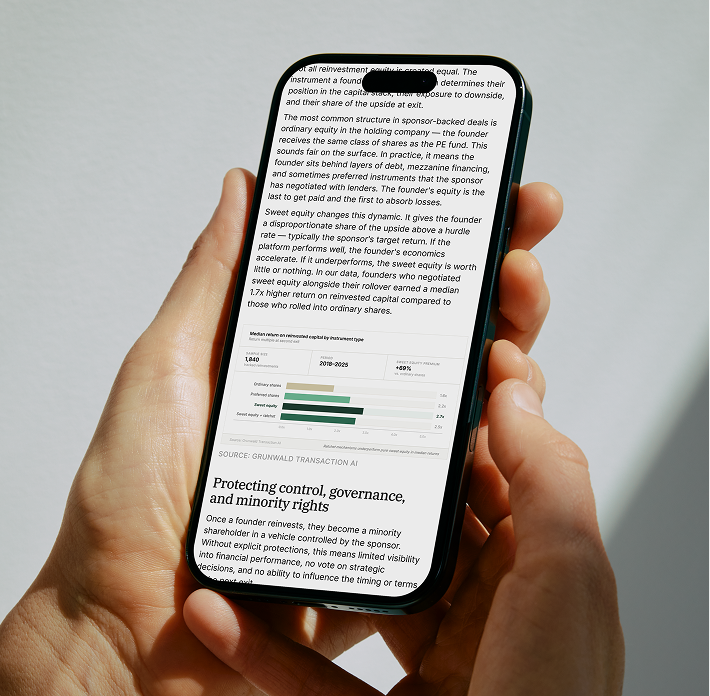 Chapter 2
How entry valuation, liquidation preference and dilution determine what your rolled-over stake is really worth — including a full waterfall.
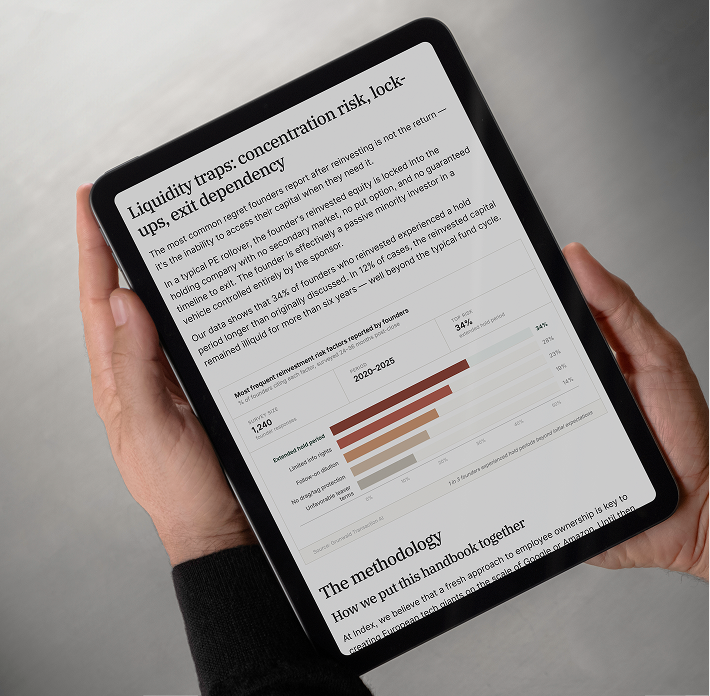 Chapter 3
The six risks that erode rollover equity, the tax levers for your net return and seven points that secure your position.
 Lorenzo LenhardInvestment Professional @ Feldberg
Investment Professional with over five years of private equity and investment banking experience. He previously worked at a tech and software focused fund investing in the German mid market out of Munich.
For owners, founders and their advisers. No sharing, no spam.